


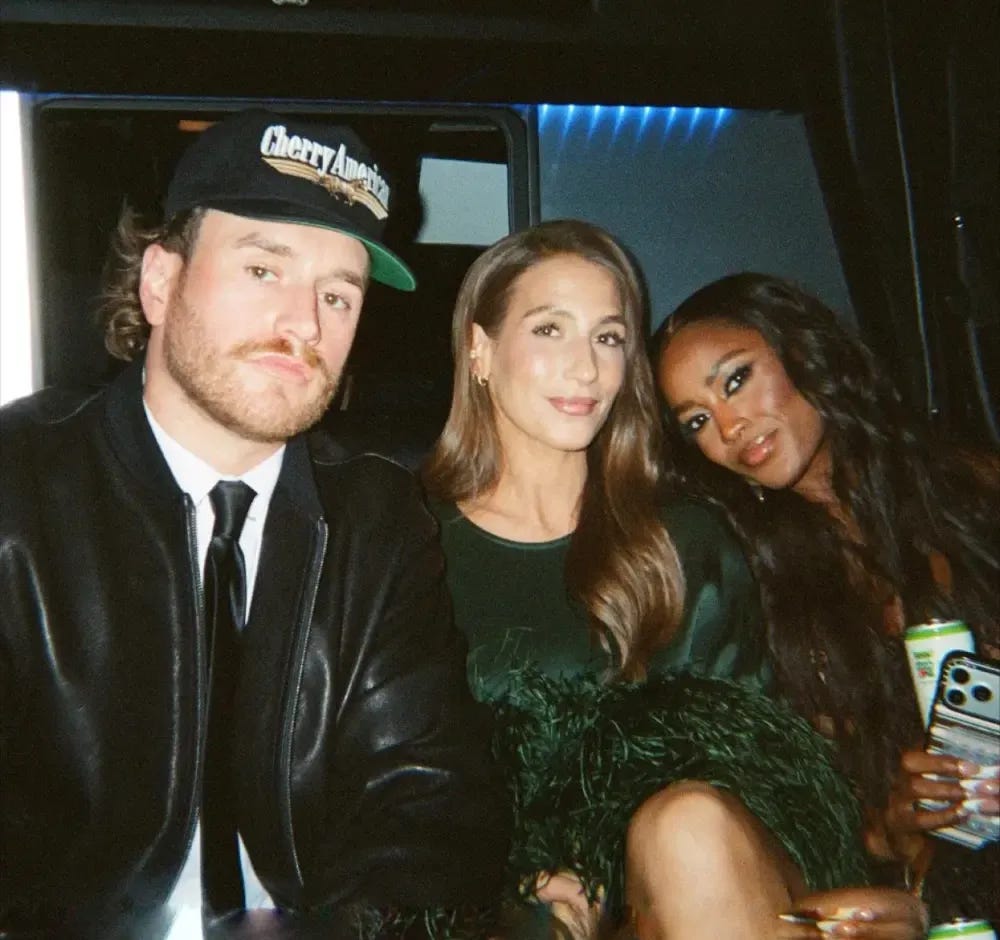
A few weeks ago, I found myself deep in Bravo TikTok watching the fallout from the West Wilson saga on Summer House. If you don’t watch Summer House, West was supposed to be one of the good ones. Funny. Charming. Self-aware. Slightly awkward in an endearing way. The golden retriever boyfriend of reality television. The kind of man women root for because he doesn’t immediately register as a fuckboy. Then the story started to shift. Ciara spoke about feeling misled. Other women emerged. Different timelines appeared. Different stories surfaced. Suddenly people weren’t discussing one disappointing relationship. They were discussing a pattern.
As I watched the discourse unfold, I found myself thinking less about West and more about somebody I used to know. We all know a West Wilson eventually. Mine wasn’t a boyfriend. Mine was a friend. And seeing West on television reminded me of a chapter of my life that ended years ago, but still occasionally reappears whenever another charming man gets exposed and the internet collectively asks the same question: “How did nobody see this sooner?”

The truth is, I think that’s the wrong question. Because whenever these stories emerge, there is always an assumption that the women around these men must have been naïve, blinded by attraction or somehow incapable of recognising what was happening in front of them. I reject that completely. I am not somebody who blindly gives men a free pass. I’ve spent most of my adult life doing the opposite. I believed women during Me Too. I have called out bad behaviour when I saw it. I’ve challenged men in friendships, workplaces and relationships. I have never been interested in protecting men from the consequences of their actions.
Which is exactly why my own West Wilson still bothers me.
Looking back, I don’t think the question is how I missed it. The question is why I explained it away. The answer has very little to do with him and a lot to do with where I was in my own life at the time. I was carrying my own trauma. I was struggling with confidence. I was desperate to believe that people were fundamentally good. I wanted to be understanding. I wanted to be compassionate. I wanted to be fair. Unfortunately, those qualities can sometimes become liabilities when they are not balanced with strong boundaries.
The thing about West Wilson types is not that they’re criminal masterminds. It’s that they’re excellent at controlling information. Everybody gets a different version of the story. One woman hears one narrative. Another woman hears something completely different. Friends hear one explanation. Partners hear another. Nobody is comparing notes because nobody even realises there are notes to compare and everyone is kept separate. Everybody believes they understand the situation because they have been given just enough information to think they do.
Watching the Summer House conversation unfold reminded me of the moment Ciara began connecting dots with other women in West’s life. Suddenly things that seemed isolated no longer looked isolated. Patterns started appearing. Contradictions became impossible to ignore. Information that didn’t make sense suddenly made perfect sense when viewed alongside somebody else’s experience. That resonated with me because the same thing happened in my own life.
For years, I defended my West Wilson. When people in my life criticised him, I explained him. The reality is that I wasn’t hearing from the other women. I wasn’t comparing notes. I wasn’t seeing the bigger picture because, like many West Wilson types, he was very good at keeping people separate. Everyone existed in their own little bubble, hearing their own version of events and believing they had the full story. I certainly thought I did.
Not because I was a pick-me. Not because I wanted male approval. Not because I thought women were lying. Quite the opposite. I genuinely believed I was making a fair judgement based on the information I had available to me. What I eventually realised was that the information itself was incomplete. I didn’t have the fuller picture at all. I had one piece of a much larger puzzle, and it wasn’t until the dots started connecting that I understood just how much I hadn’t been seeing. It was realising that people who had never spoken to each other were describing remarkably similar patterns of behaviour. Suddenly what looked like isolated incidents became something much bigger. Once I saw that pattern, I couldn’t unsee it.
I also want to be clear about something. I did not end that friendship because my feelings were hurt. I did not end it because of a disagreement. I did not end it because somebody disappointed me. I ended it after serious allegations emerged that fundamentally changed how I viewed the situation. The friendship ended years ago. I haven’t spoken to him since. I have absolutely no regrets about that decision.
What the West Wilson discourse reminded me of wasn’t heartbreak. It was recognition. Recognition of a type of man who survives because everybody around him is separated. A type of man whose greatest strength isn’t necessarily his charm but his ability to ensure that different people never compare experiences. The moment people start talking to each other, the illusion starts to crack.
The older I get, the less interested I am in understanding why people behave badly. Trauma may explain behaviour, but it does not excuse it. At some point, adults become responsible for the damage they leave behind. And at some point, the people around them have to decide whether they are going to keep carrying those excuses or finally put them down.
The truth is that most women will meet a West Wilson at some point in their lives. Some will date him. Some will work with him. Some will be friends with him. Some will spend years defending him. But eventually, if we’re lucky, we compare notes. We connect dots. We see the pattern for what it is. And once you see it clearly, there is really only one thing left to do.
Leave.
I did. And watching Summer House reminded me exactly why.
P.S. If this topic interests you, you might also enjoy my recent column on race, Ciara and Summer House. One of the reasons I love Bravo is that beneath the cocktails, chaos and confessionals, these shows often open up conversations about much bigger issues. Sometimes reality television tells us more about ourselves, our relationships and the world around us than we’d like to admit.