

The Summer House Experiment
What one season of reality television revealed about race, masculinity, friendship, mental health, healing, and the stories we tell ourselves about adulthood


Every season of Summer House eventually stops being about the Hamptons.
What begins as a show about attractive people drinking rosé in themed outfits inevitably becomes something else entirely. Beneath the parties, hookups and weekend drama, the series functions as a surprisingly effective study of modern adulthood. The cast may think they are navigating relationships, friendships and house politics, but what unfolds on screen often reveals much bigger questions about gender, race, mental health, masculinity, accountability and what it actually means to grow up.
That is why reality television remains one of the most misunderstood genres in popular culture. Critics dismiss it as shallow because they focus on the setting rather than the substance. Yet some of the most revealing conversations about power, identity, friendship and human behaviour now happen through reality television, precisely because the people involved are not reading from a script. The audience may arrive looking for entertainment, but they often leave debating questions that extend far beyond the cast themselves.

This season of Summer House was particularly revealing. Over the course of one summer and a reunion, the show became a lens through which viewers argued about the "good guy" myth, the politics of race and empathy, male vulnerability, mental health, healing after heartbreak, the friendships we outgrow and the friendships that save us. In the process, it revealed just as much about the audience watching as it did about the people on screen.

The West Wilson storyline revealed something far more interesting than the rise and fall of a reality television favourite. It revealed how quickly audiences attach themselves to an archetype.
After I wrote We All Know a West Wilson, readers flooded my messages with stories about different men who somehow sounded exactly the same. The details changed. Yet everyone seemed to recognise the character. West was never really one man. He was a type.
Every generation gets its version. The modern West Wilson isn’t the obvious cad of early 2000s television. He’s not Karl Mayer cheating his way across Wisteria Lane. He is softer, funnier and appears more self-aware. He goes to therapy. He understands the language of emotional intelligence. He knows what accountability is supposed to sound like. That is precisely what makes him difficult to spot.
The problem with men like this is not that they are obvious villains. It is that nobody seems to know the same version of them. To one woman, they are thoughtful. To another, they are avoidant. To one friend, they are loyal. To another, they are unreliable. They leave behind confusion rather than certainty, creating a maze of mixed messages, half-truths and contradictions that keep everyone trying to solve a puzzle that never quite fits together.
What made West particularly revealing this season was not simply his treatment of Ciara, but his admission that he had only recently begun to understand certain aspects of her experience as a Black woman. The statement was intended as growth, but it also raised an uncomfortable question. If you are only seeing that part of someone now, what exactly were you seeing before? Ciara did not become a Black woman in season ten. She was a Black woman in seasons eight and nine, too.
Perhaps that is why the audience reaction became so divided. The disappointment was never really about one failed relationship. It was about watching a fantasy collapse. West arrived as the internet’s favourite boyfriend and left as a reminder that charisma and character are not always the same thing.

If West represented a familiar male archetype, then Ciara represented something equally revealing: the impossible balancing act Black women are still expected to perform in public.
One of the most fascinating things about Ciara’s time on Summer House is how often she has been asked to carry contradictions that would break most people. She is expected to be beautiful but not intimidating. Successful but not threatening. Confident but not arrogant. Vulnerable but not emotional. Strong but never angry. The target seems to move depending on the viewer, but the expectation remains remarkably consistent.
Part of the problem is that Ciara suffers from what I can only describe as the “effortlessly intimidating woman” phenomenon. She is beautiful, accomplished, composed and seemingly self-contained, which leads many people to assume she is somehow immune to the vulnerabilities that plague everyone else. Audiences often confuse poise with invincibility. They see a woman who looks like she has it all together and forget she is still a woman navigating rejection, disappointment and heartbreak in front of millions of people.
It is a pattern I explored previously in The Problem Isn’t Ciara’s Reaction. What struck me then, and continues to strike me now, is how often conversations surrounding Ciara become centred on her response rather than the behaviour that provoked it. Time and again, the discussion shifts away from what happened and towards whether Ciara reacted correctly, calmly enough, graciously enough or attractively enough. The focus moves from the wound to the person bleeding.
Reality television has a habit of revealing cultural expectations we would rather pretend no longer exist. Black women, in particular, are often expected to absorb disappointment gracefully, communicate pain perfectly and remain endlessly composed regardless of what is happening around them. Their hurt must be understandable but not inconvenient. Their anger must be justified but not unsettling. Their vulnerability must be visible but never messy.
What audiences were often reacting to in Ciara was not simply Ciara herself, but the discomfort of watching a Black woman refuse to make herself smaller for other people’s comfort. She was not willing to laugh things off, play the cool girl or pretend situations hurt less than they did. That refusal is often interpreted as an attitude when, in reality, it is self-respect.
Perhaps the most revealing question is not whether Ciara’s reactions were always perfect. Few people’s are. The more interesting question is why perfection is so often demanded of her in the first place. Male white cast members are frequently granted complexity. They are allowed to be contradictory, flawed, confused, evolving and occasionally selfish. Ciara, by contrast, is often expected to be a role model, a therapist, a beauty queen and a saint simultaneously. Anything less can quickly become evidence against her.
That is why the conversation surrounding Ciara ultimately extends far beyond one relationship or one season of reality television. It speaks to a much larger question about who gets afforded softness, who gets afforded complexity and who is expected to carry their pain elegantly enough to make everyone else comfortable.

That is why Mia’s presence felt so significant.
One of the most quietly powerful moments of the season was watching another Black woman refuse to allow Ciara’s accomplishments to disappear into the background. On a show where conversations often revolve around who is dating whom, who hurt whom and who owes whom an apology, Mia repeatedly brought the focus back to who Ciara actually is.
Not the storyline. Not the love interest. Not the woman reacting.
The woman herself.
Because somewhere between the endless debates about relationships and reality television drama, it becomes easy to forget that Ciara is a nurse, a model, a homeowner and a woman who has built a remarkable life for herself. Mia’s support was not simply a friendship gesture. It was a refusal to let the audience lose sight of the full picture.
As one viewer observed, there is something profoundly moving about watching a woman only a handful of generations removed from enslavement build wealth, ownership, visibility and opportunity in spaces that were never designed with her in mind. That perspective does not place Ciara beyond criticism. What it does provide is context.
And context matters.
One of the most common ways society diminishes women is by reducing them to the worst thing that happened to them. One of the most common ways society diminishes Black women is by reducing them to the moment they reacted to it.
What Mia understood was that before Ciara was a storyline, she was a success story.
Sometimes, the most radical thing one woman can do for another is remind the room who she is when everyone else has become distracted by who they want her to be.
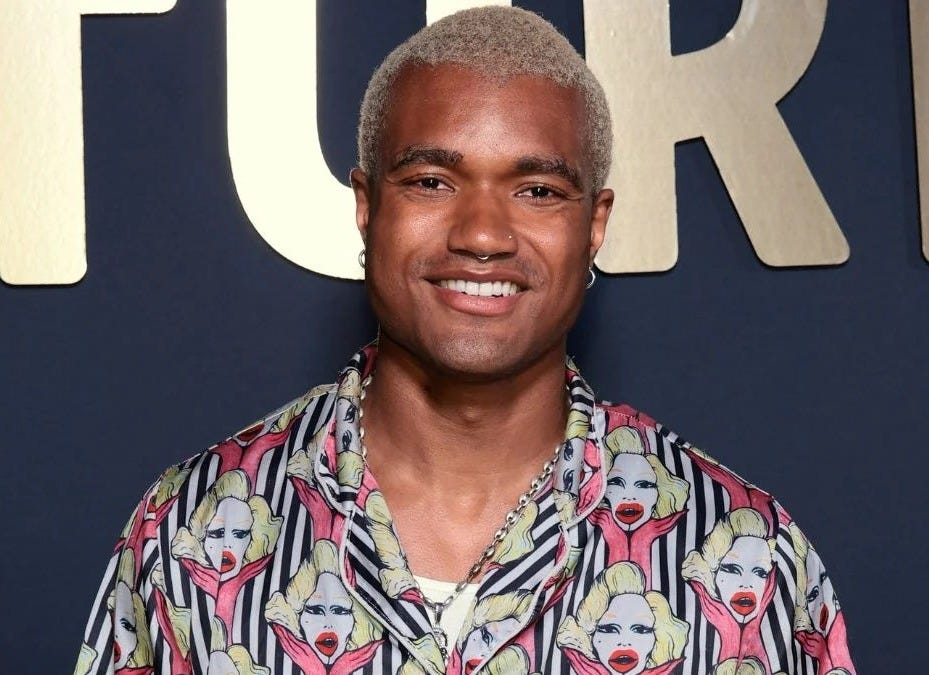
If Ciara’s story exposed the narrow emotional range often afforded to Black women, KJ’s reunion revelations exposed something equally uncomfortable about Black men.
One of the most revealing moments of the reunion came when KJ spoke openly about being sectioned following self-harm, receiving a bipolar diagnosis and navigating a level of emotional pain viewers had not fully understood throughout the season. He also explained that parts of the Amanda and West situation had triggered unresolved wounds connected to his father’s infidelity. It was a raw, vulnerable and deeply human moment.
Yet what fascinated me was not what KJ shared. It was how some people responded to it. Almost immediately, sections of the audience seemed irritated by his sadness. Social media was filled with comments suggesting he was making the reunion about himself, dwelling on the past or seeking sympathy. The reaction felt strangely revealing because KJ was not attempting to excuse harmful behaviour or avoid accountability. He was offering context. He was explaining a wound.
Somewhere along the way, we seem to have developed a habit of confusing explanation with excuse. The distinction matters.
Mental illness, trauma and grief do not exist solely to explain away bad behaviour. Sometimes they simply explain behaviour. Sometimes they explain why someone is sad, why they are triggered, why they are struggling or why they are still carrying something long after everyone else has moved on.
What struck me most was how little space seemed to exist for KJ to be complicated. There appeared to be an unspoken expectation that he should either be resilient or broken, strong or vulnerable, sympathetic or frustrating. Yet human beings are rarely that tidy. Most of us are several contradictory things at once.
That question feels particularly relevant when discussing Black cast members. Throughout this season, Ciara, KJ and Mia found themselves navigating different versions of the same challenge: the pressure to package their humanity in ways that feel comfortable for other people. Ciara was often expected to make her hurt smaller. KJ was often expected to make his pain easier to digest. Mia, meanwhile, found herself doing something Black women are frequently required to do in professional and social spaces alike: reminding people of accomplishments that should never have needed reminding in the first place.
The irony is that modern culture constantly tells people to be vulnerable. We celebrate therapy. We encourage openness. We share infographics about mental health. We tell men to talk about their feelings. What we rarely discuss is that vulnerability becomes significantly less appealing once it stops being inspirational.
People are comfortable with healing. They are less comfortable with witnessing someone who is still healing.
KJ’s story was messy, emotional, unresolved and occasionally uncomfortable. In other words, it looked remarkably similar to real life.
Perhaps that is what made the audience reaction so interesting. It raised a question that extends far beyond reality television. Who gets afforded complexity? Who gets to be both hurting and imperfect? Who gets grace while they are still figuring things out?
Because one of the recurring themes of this season was that some people are allowed to be human, while others are expected to be examples.
And there is a difference between the two.
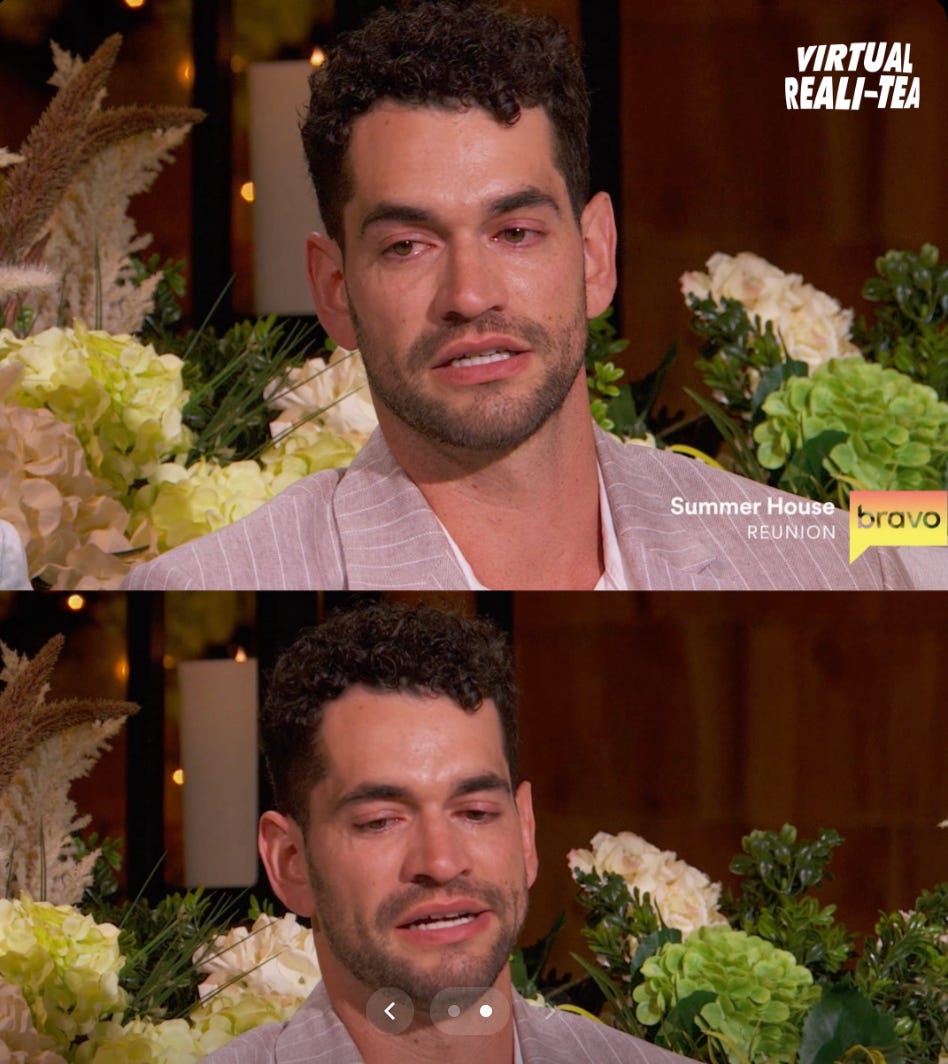
The reunion also quietly revealed a cultural shift that would have been far less common on reality television twenty years ago: multiple men crying openly on stage.
Jesse, Carl, KJ and Kyle each showed different versions of vulnerability, discussing fear, regret, therapy, mental health and emotional overwhelm without immediately framing those emotions as weakness. For decades, popular culture rewarded men for being detached, emotionally contained and difficult to read. This reunion looked noticeably different.
But the reaction also exposed an uncomfortable double standard. White men are often granted more room to be emotional, messy and publicly vulnerable, while Black men are more likely to have their pain questioned, scrutinised or treated as excessive.
That is why the reunion felt significant. The issue was not simply that men cried. It was the audience response that revealed which kinds of male vulnerability we still find acceptable and which kinds we are less comfortable sitting with.

If West represented the fantasy and KJ represented the wound, Carl represented something else entirely: the after.
Reality television is obsessed with beginnings and endings. The first date. The engagement. The betrayal. The breakup. The explosive reunion. What it rarely shows is what happens once the credits should have rolled. How do two people move forward after publicly hurting one another? How do they exist in the same room after disappointment, resentment and heartbreak? How do they stop being a couple without becoming enemies?
That is what made Carl and Lindsay unexpectedly compelling this season.
In a culture increasingly addicted to scorched-earth endings, there was something almost radical about watching two people attempt to build respect where love had failed. Neither pretended the past had not happened. Neither suddenly became perfect. Yet there was a visible effort to move away from punishment and towards peace.
What struck me most was how unglamorous that process looked. Popular culture loves transformation stories because they are clean. We love the breakthrough moment. The dramatic comeback. The perfectly packaged redemption arc. Real healing is usually far less cinematic. It is repetitive, frustrating and often deeply ordinary. It happens through boundaries, difficult conversations, therapy appointments and small decisions made over and over again.
That is why Carl’s journey has become so interesting. Sobriety is often discussed as though it is a finish line, when in reality it is an ongoing reorganisation of self. Watching him navigate life after addiction, after heartbreak and after the devastating loss of his brother has been a reminder that recovery is not about returning to who you were before. It is about becoming someone new.
Perhaps the most moving part of Carl’s story this season was not what he was leaving behind, but what he was building. Watching him open Soft Bar felt significant because it represented something larger than a business venture. It was a physical manifestation of a life he could not have built in an earlier chapter of his story. A space rooted in connection rather than escape. Community rather than self-destruction. Presence rather than avoidance.
We often talk about healing as though it means getting over something. Carl’s story suggests something different. The goal is not to erase what happened. The goal is to build a life large enough that what happened is no longer the only thing defining you.
Perhaps that is why Carl and Lindsay felt so compelling this season. For all the conversations about breakups and failed engagements, what we were really watching was two people trying to figure out who they wanted to be after the story they thought they were living came to an end.

Lindsay’s version of healing looked very different.
For years, Lindsay Hubbard has existed at the centre of the storm. She has been the woman arguing, ending the relationship, demanding the conversation or forcing the issue everyone else wanted to avoid. Entire seasons of Summer House have revolved around Lindsay’s emotional life, often reducing her to a collection of reactions while overlooking the experiences that produced them.
This season felt different. For perhaps the first time, Lindsay was not the story. She was watching it unfold.
Part of that shift undoubtedly came from motherhood. Watching her navigate life as a new mother while simultaneously rebuilding her identity after one of the most public breakups in Bravo history felt surprisingly moving. There was a softness to her this season that did not feel performative or forced. It felt earned. Not because motherhood magically transforms women into better people, but because certain experiences force a reckoning with what matters and what no longer deserves your energy.
What made Lindsay particularly interesting was the way she seemed to move from protagonist to observer. Throughout the season, she often occupied the role of sounding board, mediator and truth-teller. During the explosive Carl and Kyle confrontation, she was one of the few people capable of seeing beyond the immediate emotion and recognising the deeper hurt sitting underneath it. Rather than escalating conflict, she repeatedly appeared to be searching for understanding.
There is something quietly powerful about watching someone who has spent years being misunderstood become the person trying to understand everyone else.
Perhaps that is why her reunion observations about West landed so strongly. When Lindsay accused him of treating women as though they were disposable, it did not feel like a dramatic reality television moment. It felt like pattern recognition. It felt like the perspective of a woman who had lived long enough, dated enough and been disappointed enough to recognise a familiar script when she saw one.
The irony is that Lindsay’s greatest growth this season was not becoming less emotional. It was becoming more discerning. She no longer seemed interested in winning every battle or proving every point. Instead, she appeared increasingly interested in understanding the people around her and protecting the life she had built beyond the show.
Given what viewers know about Lindsay’s complicated relationship with her own mother, there was something particularly poignant about watching her step into motherhood herself. For years, much of Lindsay’s story has been shaped by abandonment, rejection and the search for emotional security. This season offered a glimpse of something different: a woman creating the stability she once spent years looking for.
If Carl’s story was about rebuilding a life after loss, Lindsay’s was about discovering that healing does not always arrive as closure. Sometimes it arrives as perspective.

Friendship may have been the most quietly important story of the entire season.
One of the lessons of your thirties is realising that there is a difference between friends who are fun and friends who are safe. In your twenties, you are often drawn to the people who make life exciting. In your thirties, you start looking for the people who make life feel softer.
The most meaningful relationships this season were not necessarily the loudest ones. They appeared in small moments. Bailey instinctively covering her rosé glass when Carl mentioned that the smell of alcohol could be triggering. Levi consistently showing up for Bailey. Mia making sure Ciara was seen as a whole person rather than simply a storyline.
None of these moments were dramatic. That is precisely why they mattered.
By your thirties, friendship stops being about who surrounds you and starts being about who steadies you. The people who change your life are rarely the ones making speeches about loyalty. They are the ones quietly paying attention. The ones who remember what hurts. The ones who celebrate your wins without competing with them. The ones who make room for your vulnerability without treating it like a weakness.
Perhaps that is the real difference between being liked and being loved. One fills a room. The other makes it feel safe enough to stay.

If West represented a type of man many women eventually encounter, Amanda represented a type of woman many women eventually learn to fear.
Not the obvious mean girl. The obvious mean girls are easy. They announce themselves.
The more dangerous version understands that power works best when it remains invisible.
By their thirties, most women have met her. The woman who never quite says enough to be confronted directly. The woman who understands that a raised eyebrow can do more damage than an insult and that a carefully placed comment can travel much further than an argument. She rarely appears to be at the centre of conflict, yet somehow conflict seems to gather around her.
What makes this archetype so difficult to explain is that she rarely leaves evidence behind. The influence is real, but the fingerprints are missing.
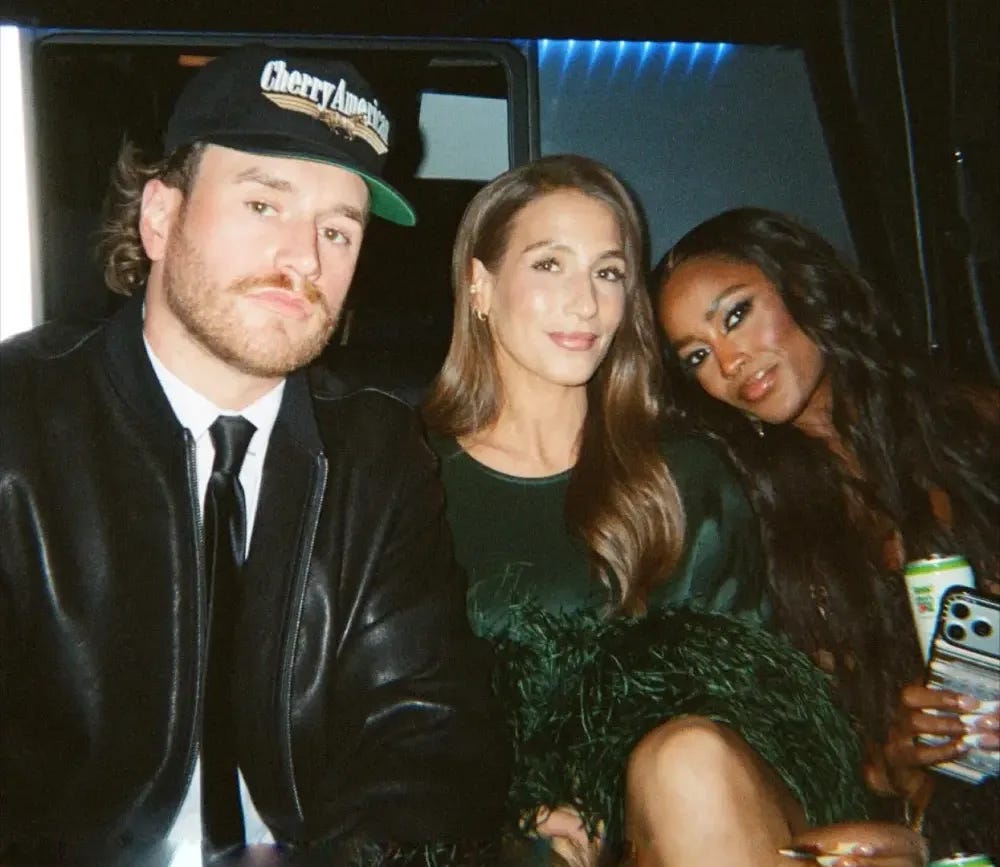
Watching Amanda this season, I found myself thinking about a particular type of female social currency: validation.
Not love. Not friendship. Validation.
The need to be chosen. Preferred. Prioritised.
The need to remain relevant in the emotional economy of the room.
The attention is the prize. The validation is the currency.
Once you recognise that dynamic, certain behaviours begin to look different. You start noticing who seems unsettled when another woman becomes the focal point. Who appears most comfortable aligning herself with male approval. Who consistently remains adjacent to drama while avoiding responsibility for its outcome.
Part of the reason Amanda generates such strong reactions from some viewers is that many believe they have noticed a pattern. Across multiple seasons, tensions have repeatedly emerged with women of colour such as Jules, Danielle, Gabby and, more recently, Ciara. Whether those incidents are connected or entirely unrelated is ultimately for viewers to decide. But people are rarely reacting to a single moment. They are reacting to repetition.
And repetition changes how we interpret behaviour.
One of the more interesting lessons adulthood teaches is that influence and responsibility do not always occupy the same space. Some people throw the punch. Others simply create the conditions for it. Some people become known for their reactions. Others become skilled at provoking them while remaining above the fray.
The latter is usually harder to spot.
After all, history tends to remember the person who fired the cannon.
Not always the person who quietly supplied the ammunition.
The most destabilising friendships are rarely the loudest ones. They are the ones that leave you questioning yourself. The ones where every individual incident seems insignificant, but the overall pattern feels impossible to ignore.
By your thirties, you begin to understand that discomfort is data.
You do not need a confession.
You do not need a smoking gun.
Sometimes the pattern is the proof.

Kyle’s story highlighted another uncomfortable truth about adulthood: we are often suspicious of the person reacting and remarkably forgiving of the person provoking.
One of the easiest mistakes to make in any conflict is assuming that the loudest person is automatically the problem. The person crying, shouting, exploding or losing their composure becomes the focal point because their behaviour is visible. The frustration is obvious. The reaction is undeniable.
The slow accumulation that led there is usually much harder to see.
Reality television is particularly good at capturing explosions and much less effective at capturing erosion. It can show you the argument. It cannot always show you the hundred small moments that came before it. The dismissals. The digs. The withdrawals. The feeling of speaking and not being heard. The quiet ways resentment accumulates over time.
That is what made Kyle so interesting this season. For years, Kyle has often been cast as the emotionally reactive one. The loud one. The dramatic one. The one viewers are encouraged to roll their eyes at. Yet this season repeatedly raised a more complicated question: what happens when the person losing their temper is not reacting to a single incident, but to a pattern?
This is not an argument that Kyle is always right. He isn’t. Nor is it an argument that Amanda is always wrong. It is an argument against simplicity.
Because one of the most valuable lessons adulthood teaches is that emotional damage is not always delivered loudly. Sometimes it arrives through distance. Through indifference. Through subtle undermining. Through making someone feel perpetually unseen.
We tend to notice the match.
We pay far less attention to the person holding the lighter.
Perhaps that is why Kyle’s story resonated with so many viewers. Beneath the arguments and frustration was a reminder that relationships are rarely defined by a single moment. They are defined by patterns.
And sometimes the person who looks the most unreasonable is simply the person who finally ran out of ways to be reasonable.
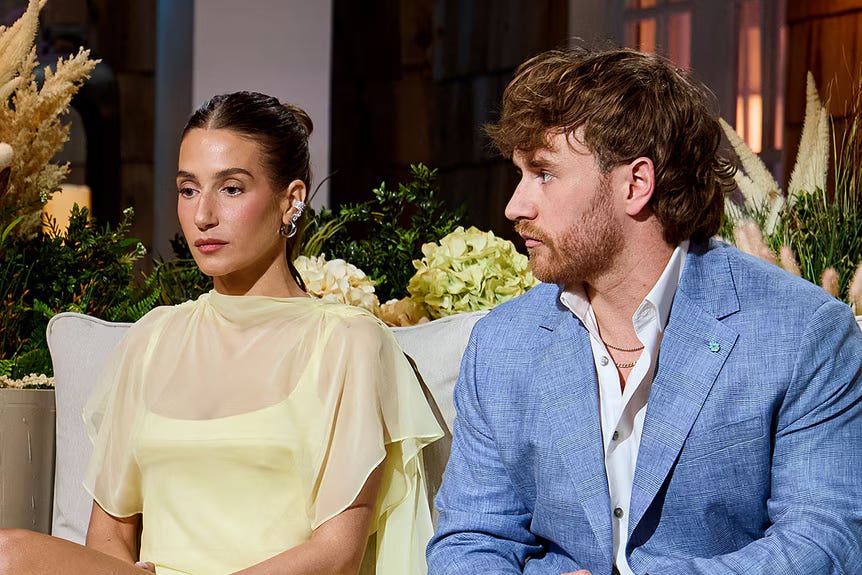
One of the more striking visuals of the reunion was not who was speaking, but who appeared to have mentally left the room.
At various points, Amanda and West seemed disengaged from conversations about accountability, hurt and impact. Whether that was discomfort, avoidance, exhaustion or self-protection is impossible to know.
But it was noticeable.
In a reunion filled with people naming wounds, discussing triggers and attempting to explain themselves, disengagement became its own form of communication.
Some people want resolution. Some people want understanding. Some people simply want the discomfort to end.
What people refuse to engage with can sometimes tell you their true character as much as what they choose to say.

Perhaps that is why Summer House has become more interesting as its cast has aged.
The original premise was escapism. Young professionals fleeing New York for weekends of excess, freedom and bad decisions. But somewhere along the way, the show quietly evolved into something else. The party is still there, but the party is no longer enough.
The hidden brilliance of Summer House is that it is no longer really about summer.
It is about the end of summer.
It is about the moment people realise that the version of themselves that once felt glamorous, chaotic or free may no longer be sustainable. The moment when the hangover lasts longer than the party. The moment when avoiding your problems becomes harder than facing them.
Because the strongest thread running through this season was not romance, friendship or even conflict. It was the simple reality that you can leave the city, but you cannot leave yourself.
Wherever you go, you bring your history with you. The childhood wound. The failed engagement. The addiction. The diagnosis. The betrayal. The fear of being unwanted. The fear of being unseen.
The house became less a summer share and more a pressure cooker for everything left unresolved.
Perhaps that is why the season resonated so deeply. Not because everyone behaved perfectly—they didn’t. Not because every storyline reached a satisfying conclusion—they rarely do. But because it captured adulthood at the exact point where the consequences become real.
These are no longer twenty-somethings mistaking chaos for a personality trait. They are people navigating grief, recovery, parenthood, heartbreak, friendship and identity in real time. The stakes are no longer simply social embarrassment or romantic disappointment.
The stakes are who you become because of what happened to you.
Reality television works because it allows us to judge other people from a distance. The best reality television eventually removes that distance. We start by asking why they are like that and end by wondering where we are like that too.
Where have we mistaken charm for character?
Where have we demanded perfection from people we never expected to be human?
Where have we confused explanation with excuse?
Where have we stayed in friendships that made us feel small because the harm was difficult to name?
Where have we applauded vulnerability in theory and struggled with it in practice?
That is why this season deserves more than a recap.
West revealed how badly we want to believe in the emotionally evolved man. Ciara revealed how often Black women are expected to make pain elegant before it is believed. KJ revealed how conditional our compassion for male vulnerability can still be. Carl and Lindsay showed that healing is not always reconciliation, but sometimes simply learning how to move forward. Bailey, Levi and Mia reminded us that the most important relationships in adulthood are often the quietest ones. Amanda and Kyle showed how easily we confuse the loudest reaction with the original wound.
In the end, Summer House was never really about the Hamptons.
The Hamptons were simply the setting.
The real subject was adulthood. Messy, unfinished, contradictory adulthood.
The kind that asks the same questions over and over again.
Who gets grace? Who gets believed? Who gets forgiven? Who gets to be complicated? Who gets to grow?
The answer, as ever, depends on who is watching.